
There’s a sign in a KFC car park which reads:
90 MINUTES MAXIMUM STAY FOR KFC CUSTOMERS ONLY
To John Allister, it means what it says: the 90-minute limit applies only to customers; anyone else may stay as long as they like. That small detail captures the heart of this book. Autistic people often read what is written, rather than what is socially implied, and Faith, Hope and Autism invites leaders to look again at their churches, not as they assume them to be, but as they are experienced.
Allister describes another strength, that autistic people are often largely immune to charisma.
Charisma relies heavily on non-verbal cues, rather than evidence or argument, so it does not carry the same persuasive force. In a context that might reward external confidence, listening to those who see differently can be a quiet safeguard.
Written by autistic vicar The Rev John Allister, the book brings together Scripture, lived experience and a practical 20-point framework. It challenges churches to rethink belonging as a gospel issue and build communities where neurodivergent people flourish.
The lesson is that church leadership is about helping people grow as followers of Christ. That means noticing gifts, shaping pathways for discipleship, and building cultures where people belong and serve. Like many clergy, I recognise moments of good practice in parish life, but I also recall times when people have had poor experiences of community, Christian teaching or involvement. This book opens our eyes to why that may be, pressing us to examine the assumptions our churches operate with.
Early on, Allister describes his younger self as clever, loyal, generous, and a committed Christian who never missed church, yet deeply hurting. ‘When most people look at him,’ he writes, ‘they see either his huge potential or his social awkwardness. But when I look at him, I see how much he is hurting.’ That hidden cost runs through the book.
He translates autistic experience into everyday church realities leaders will recognise as relevant: sensory overload in worship, exhaustion from social interaction, difficulty with small talk, and the need for predictable structures. He draws on the ‘spoon theory’ of autism, by Christine Miserandino, to describe how autistic people manage demands around noise, crowds and ambiguity. For leaders, it reframes attendance from usual commitment to a significant effort that deserves recognition.
As someone who benefited from working alongside a highly gifted and deeply committed autistic Christian on a church staff team, this is a book I wish I had read ten years ago.
What becomes clear is how ordinary church practices can unintentionally exclude. Allister offers practical adaptations churches can make: addressing echoey coffee spaces, clarifying instructions, structuring PCC discussions, ensuring worship songs are theologically coherent and questioning assumed ‘normal’ pathways into faith. He challenges what he calls the ‘cult of normalcy’ the assumption that there is one standard way to belong. There is a helpful section on faith growth through involvement.
The section on Becoming a Neurodiverse Church is particularly accessible with its 20-point list of actions covering worship, communication, environment, participation and leadership. It reads like a ready-made checklist for PCCs and ministry teams. Much of what he proposes is about understanding, adaption and attentiveness.
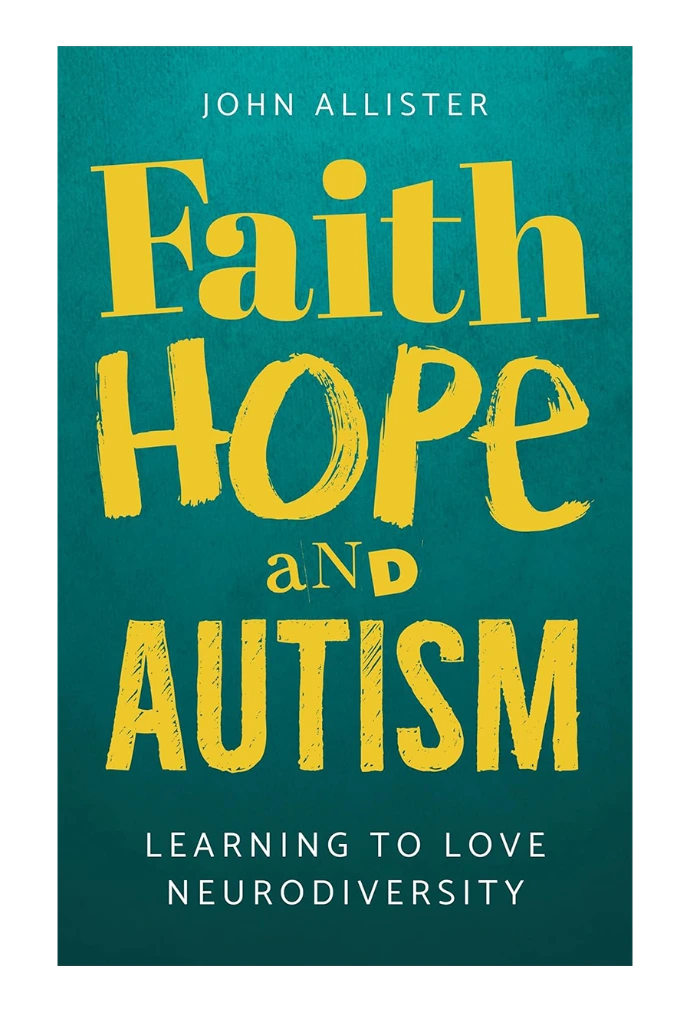 The book is rooted in Scripture. Drawing on 1 Corinthians 12, Allister reminds us that difference is intrinsic to the body of Christ. Reflecting on Acts 6, he highlights how the apostles listened, validated concerns, involved the whole church and then gave power away. It is a model of leadership that is strikingly relevant.
This is a book that moves the reader through growing understanding and good intentions to intentional design as a gospel issue.
Thoughtful and theologically grounded, Faith, Hope and Autism is a book every church leader should read, not because autism is a niche concern, but because Allister’s description of belonging lies at the heart of the gospel.
April 2026 Lead On Review by Simon Taylor, CPAS Leadership Enabler.